Parents often ask us why we recommend starting swim lessons at 2 months. Those of you who know me know that I could go on for hours describing the many reasons why earlier is better when it comes to swim lessons, but here's the "short list":
Reflex: Infants are born with many reflexes. The startle reflex (or Moro reflex) is one that causes babies to inhale (perfect for breath control underwater!). By blowing in the baby's face, we are able to take advantage of this natural reflex when submerging infants. This reflex doesn't last forever, and typically disappears around 7 months. It's a shame to miss this excellent window that mother nature gives us.
Bonding: There are few "activities" parents can do with their non-mobile infant. Swim class provides a myriad of sensory stimuli including eye contact and skin to skin contact. LPB provides a safe, clean and warm environment for parents and babies to connect.
Sleep: In our many years of teaching infant swim, we consistently receive parent feedback (and gratitude) about how well their babies sleep after swim class. All that sensory stimulation makes a growing baby sleepy (and hungry!).
Tummy Time: In swim class we primarily hold infants in a prone position. Teachers will teach you how to properly support your baby's head, but we find that infants tend to hold their heads up very well in the water. We also practice tummy time on the magic carpet, further strengthening neck and back muscles.
Socialization: Songs and games on the magic carpet encourage infants to connect with their fellow classmates. Moms and Dads get to make new friends too, sharing stories about how much (or little) sleep they got the night before. We've had many LPB playgroups form over the years from our Baby and Me program.
That's the short list, but for those wanting to learn more about the benefits of infant swim, click here.
Still not sure? Give us a call and book your FREE trial lesson and decide for yourself!
Monday, August 17, 2015
Thursday, July 23, 2015
Adult Swim: It's never too late to learn
Here at LPB we're big proponents of the Safer 3 message:
"If my child fell in the water and was struggling, could I swim to him in deep water or would we both potentially be at risk?"
Kids spending the week at grandma's house with a pool? Great! is it fenced and gated? Even better! Can grandma swim? Hmmm.....there's a missing layer. One of the things we teach our students during our annual Summer Safety Week is "never swim to a drowning person". Every year drowning deaths occur due to unsafe rescues. The only thing worse than someone drowning is their rescuer drowning with them.
LPB offers adult learn to swim classes at all 4 locations. We even offer special "adults only" 45 minute lessons at our Half Moon Bay location. If you or your childcare provider are not able to swim in deep water, you may be taking a risk of not providing a "Safer Response" in the event of an emergency.
But wait...there's more!
Swim lessons are also a great form of exercise for adults of all ages, shapes and sizes. It's rhythmic breathing and weightlessness adds an element of meditation in the mix, while getting the muscles moving and cardiovascular system pumping.
Still not sure? Give it a try for FREE! We offer free trial lessons at LPB.
- Safer Kids (swim lessons)
- Safer Water (safety gates/nets, barriers)
- Safer Response (caregivers trained in CPR, lifeguards etc.)
"If my child fell in the water and was struggling, could I swim to him in deep water or would we both potentially be at risk?"
Kids spending the week at grandma's house with a pool? Great! is it fenced and gated? Even better! Can grandma swim? Hmmm.....there's a missing layer. One of the things we teach our students during our annual Summer Safety Week is "never swim to a drowning person". Every year drowning deaths occur due to unsafe rescues. The only thing worse than someone drowning is their rescuer drowning with them.
LPB offers adult learn to swim classes at all 4 locations. We even offer special "adults only" 45 minute lessons at our Half Moon Bay location. If you or your childcare provider are not able to swim in deep water, you may be taking a risk of not providing a "Safer Response" in the event of an emergency.
But wait...there's more!
Swim lessons are also a great form of exercise for adults of all ages, shapes and sizes. It's rhythmic breathing and weightlessness adds an element of meditation in the mix, while getting the muscles moving and cardiovascular system pumping.
Still not sure? Give it a try for FREE! We offer free trial lessons at LPB.
Sunday, June 7, 2015
How long will this take?
Today's parent wants to know when something starts, how long it will take and when it will end. It's nice to have an idea of what to expect and what the end goal is when it comes to all things parenting. At La Petite Baleen, parents occasionally ask "how long until my kid can swim?" or "will my child EVER graduate the program?!?". We're glad you asked!
The answer is different for every child. Big shock, I know...but it's true. Some children take to water much more easily than others, just like some children pick up learning a foreign language faster than others. The only difference is that every child must learn how to swim as a life skill, while learning to speak a foreign language is optional.
Another piece of the puzzle is dependent on the goals and expectations of the parent. For example, do you want your child to learn basic safety skills, or do you want your child to learn all four competitive strokes? Here's a breakdown of our 4 levels at LPB as it pertains to parent goals and expectations:
Level 1: After graduating L1, your child can hold their breath for a short time, swim to the side of the pool and climb out. These are basic safety skills that can buy you seconds should your child ever fall in a body of water. When it comes to drowning and near drowning, seconds count in saving lives and long term brain damage.
What this means for parents: You still need to get in the water with your child and be within arms reach at all times.
Level 2: Graduates of L2 can swim without fins and breathe independently both on their tummies and their backs.
What this means for parents: You don't need to be in the water with your child, but you need to be watching, alert and prepared to jump in at all times.
Level 3: L3 graduates are strong swimmers and can safely swim in deep water. They have good endurance and can tread water for up to a minute.
What this means for parents: You can now sit on the lounge chair and relax, while keeping both eyes on your kids at all times (no phones, no kindles, no distractions).
Level 4: Gold Ribbon graduates can swim all 4 competitive strokes legally with good technical form. If they would like to join a swim team we recommend you wait until they earn at least their Freestyle and Backstroke mini-ribbons.
What this means for parents: LPB graduates are now primed and ready to explore options in the aquatic world. Swim team, water polo and synchronized swimming are all NCAA and Olympic sports. Opportunity for college scholarships at all divisions exist. LPB has produced thousands of high school and dozens of collegiate athletes. LPB is also the foundation for a career path in swim industry careers (life guarding, coaching, teaching, etc.). We employ many second and soon to be third generation employees (did we mention we're now accepting applications?).
So, depending on what your goals and expectations are for your child in swim lessons, you can be "done" at anytime. But remember, NOBODY is ever drown proofed or "water safe" (not even Michael Phelps!). On average, it takes about 3-5 years to complete all 4 levels at LPB...a commitment with life long lasting benefits.
The answer is different for every child. Big shock, I know...but it's true. Some children take to water much more easily than others, just like some children pick up learning a foreign language faster than others. The only difference is that every child must learn how to swim as a life skill, while learning to speak a foreign language is optional.
![]() |
| When to start? Yesterday! |
Another piece of the puzzle is dependent on the goals and expectations of the parent. For example, do you want your child to learn basic safety skills, or do you want your child to learn all four competitive strokes? Here's a breakdown of our 4 levels at LPB as it pertains to parent goals and expectations:
Level 1: After graduating L1, your child can hold their breath for a short time, swim to the side of the pool and climb out. These are basic safety skills that can buy you seconds should your child ever fall in a body of water. When it comes to drowning and near drowning, seconds count in saving lives and long term brain damage.
What this means for parents: You still need to get in the water with your child and be within arms reach at all times.
Level 2: Graduates of L2 can swim without fins and breathe independently both on their tummies and their backs.
What this means for parents: You don't need to be in the water with your child, but you need to be watching, alert and prepared to jump in at all times.
Level 3: L3 graduates are strong swimmers and can safely swim in deep water. They have good endurance and can tread water for up to a minute.
What this means for parents: You can now sit on the lounge chair and relax, while keeping both eyes on your kids at all times (no phones, no kindles, no distractions).
Level 4: Gold Ribbon graduates can swim all 4 competitive strokes legally with good technical form. If they would like to join a swim team we recommend you wait until they earn at least their Freestyle and Backstroke mini-ribbons.
What this means for parents: LPB graduates are now primed and ready to explore options in the aquatic world. Swim team, water polo and synchronized swimming are all NCAA and Olympic sports. Opportunity for college scholarships at all divisions exist. LPB has produced thousands of high school and dozens of collegiate athletes. LPB is also the foundation for a career path in swim industry careers (life guarding, coaching, teaching, etc.). We employ many second and soon to be third generation employees (did we mention we're now accepting applications?).
![]() |
| Teacher Liesl competing at the Pan Pacific Games in Sydney Australia |
So, depending on what your goals and expectations are for your child in swim lessons, you can be "done" at anytime. But remember, NOBODY is ever drown proofed or "water safe" (not even Michael Phelps!). On average, it takes about 3-5 years to complete all 4 levels at LPB...a commitment with life long lasting benefits.
Wednesday, June 3, 2015
Drowning: Types, Risks and Prevention
It's summertime, and everyone is suddenly thinking about swimming and water safety. Even the local media is doing stories on drowning. While we're thrilled to have the spotlight on drowning prevention and water safety at this time of year, we want to remind our families that drowning is a risk all year round.
This week, we're discussing the real risk of drowning. Recent media has brought attention to some lesser know types of drowning:
While all types of drowning are meaningful, the most poignant form for parents to be aware of is regular drowning. Dry drowning is less than 2% of all drownings, and "shallow water blackout" is most common in athletic training. Most children under the age of 5 are not actually inhaling water into their lungs (although they may ingest water into their stomachs!).
At LPB we teach underwater swimming in levels 3 and 4, and our teachers know to avoid teaching hyperventilation and to limit the number of repetitive underwater swims. It's very rare for swimmers under the age of 5 to suffer from shallow water blackout, it's more common in swim team environments. What's most important is that swimmers performing underwater swims must NEVER swim alone...but of course, no swimmer should ever swim alone regardless (our #1 rule in "summer safety week").
So, instead of getting wrapped up in the media attention focused on dry, secondary and shallow water drownings, we ask parents to focus on the real risk of drowning.
This week, we're discussing the real risk of drowning. Recent media has brought attention to some lesser know types of drowning:
- Dry Drowning: Also known as "secondary drowning", this is when a swimmer breathes in small amounts of water during a struggle. Fluid builds up in the lungs, causing pulmonary edima (the technical term for "dry" or "secondary" drowning). For more on "dry drowning" click here.
- Shallow Water Blackout: A loss of consciousness caused by cerebral hypoxia towards the end of a breath-hold underwater. It can be exacerbated by taking multiple fast breaths (hyperventilating) prior to swimming underwater. For more on on shallow water blackout click here.
- Near Drowning: This is when a swimmer is found unconscious in the water but survives.
While all types of drowning are meaningful, the most poignant form for parents to be aware of is regular drowning. Dry drowning is less than 2% of all drownings, and "shallow water blackout" is most common in athletic training. Most children under the age of 5 are not actually inhaling water into their lungs (although they may ingest water into their stomachs!).
At LPB we teach underwater swimming in levels 3 and 4, and our teachers know to avoid teaching hyperventilation and to limit the number of repetitive underwater swims. It's very rare for swimmers under the age of 5 to suffer from shallow water blackout, it's more common in swim team environments. What's most important is that swimmers performing underwater swims must NEVER swim alone...but of course, no swimmer should ever swim alone regardless (our #1 rule in "summer safety week").
So, instead of getting wrapped up in the media attention focused on dry, secondary and shallow water drownings, we ask parents to focus on the real risk of drowning.
Wednesday, May 13, 2015
What to Wear and Where
Today's parents are given many choices when it comes to all things parenting. Swimwear is no exception. We see wetsuits, swim shirts, thermal caps, baggy trunks, swim dresses and even itsy bitsy teeny weeny polka dot bikinis at La Petite Baleen. While most of these options serve a purpose in different environments, many of them are not conducive to learning how to swim at an indoor swim school.
So, what do we recommend you wear to swim lessons? We're SO glad you asked!

Because of our indoor, UV-Ray free, warm water environment, swim shirts, wetsuits and bikinis are not recommended, here's why:
A word on swim diapers: LPB's policy is that all students under the age of 3 (or over 3 and not fully potty trained) must wear a snug-fitting, non-disposable (REUSABLE) swim diaper. We realize that your 2 year old might already be fully potty trained and that you're very proud of her (we are too!). But our warm water can make students relax, and with that comes unexpected surprises in the pool.
"If all the pools in the County were as clean as La Petite Baleen's, I'd be out of a job!"--San Mateo County Health Inspector
In order to keep our pools the cleanest and safest in the Bay Area, we ask that you cooperate with our policy. If you would like to "double diaper", you may wear a disposable "swim" diaper underneath the reusable swim diaper, but be sure the disposable is tucked inside the reusable. No regular diapers please!
You can purchase appropriate "swim lesson" swimwear at our Swimformation desk, including girls cross-back suits, reusable swim diapers and boys jammers (coming soon!). We also like buying suits from www.swimoutlet.com.
Happy Splashing!
So, what do we recommend you wear to swim lessons? We're SO glad you asked!
- Babies/Toddlers under age 3: Reusable swim diapers
- Girls: Crossback, one piece swim suits
- Boys: Jammer or Speedo style swim suits
- All suits should be snug fitting

Because of our indoor, UV-Ray free, warm water environment, swim shirts, wetsuits and bikinis are not recommended, here's why:- Wetsuits: Our pool water is 90 degrees. This is the optimal temperature for learning to swim. In addition, neoprene (wetsuit material) floats, and therefore provides swimmers with buoyancy. This gives students a false sense of buoyancy which may lead to safety issues when they swim without a wetsuit on. If your child seems to be chilled during his/her lesson, encourage them to sit lower in the water while waiting their turn, or hold your child lower in the water during parent and me classes.
- Swim Shirts: While these can be beneficial for outside swim environments, there are very few harmful UV-Rays at our indoor swimming pools. These shirts are often baggy and can weigh down swimmers, causing drag in the water. In addition, these shirts can make students even more cold as it keeps a layer of wet fabric on their skin. Couple this with any kind of draft or "wind chill" and students will be shivering in no time...something to keep in mind in outdoor environments this summer!
- Baggy Trunks/Swim Dresses: While fashion is always important, so is performance. Just like swim shirts, baggy swim shorts and dresses create drag in the water, making it more difficult (and sometimes unsafe) for students to swim. Want to know why Olympians wear tight fitting jammers and speedos? Because it's easier to swim in snug fitting swimwear. We recommend reusable speedo style swim diapers for children under age 3 and speedo or jammer style swimsuits for boys over age 3. If your child is enrolled in Pre-Comp, Splashball or Water Ballet this is a uniform requirement...no swim trunks allowed on swim team!
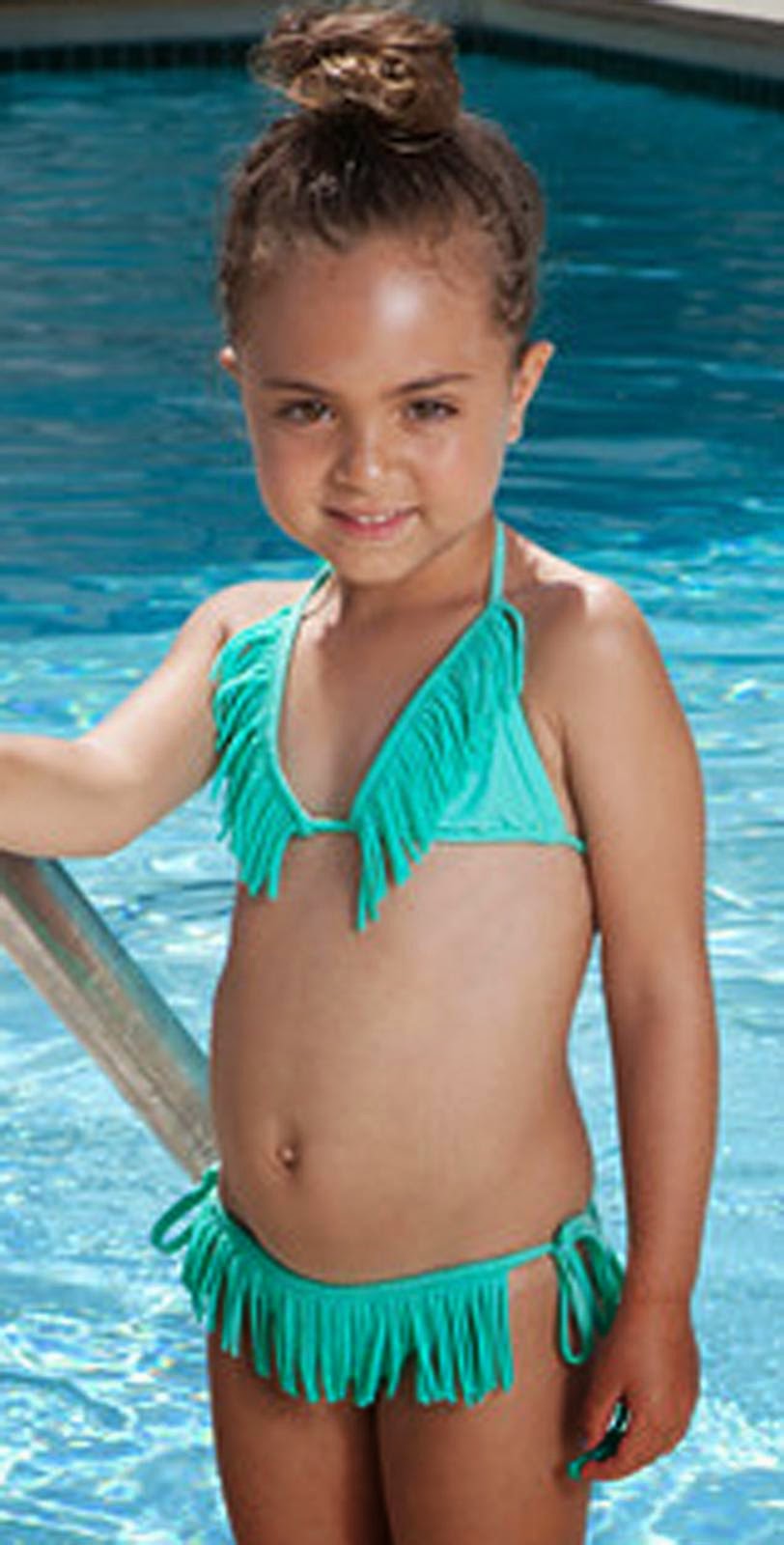
- Itsy-Bitsy Bikinis: Again, fashion is fun, but practicality is queen at swim lessons. We see little girls with bikini tops riding up, shoulder straps falling down (moms too!) and bottoms slipping off everyday in swim class. This is a distraction for both students and spectators in swim class. One piece, cross-back suits are recommended for a fitted, stay-put swim experience at LPB.
![]() |
| No baggy trunks or swim shirts at LPB! And please...don't forget to tie the drawstring! |
![]() |
| Moms and Girls...please think twice about this at swim class! |
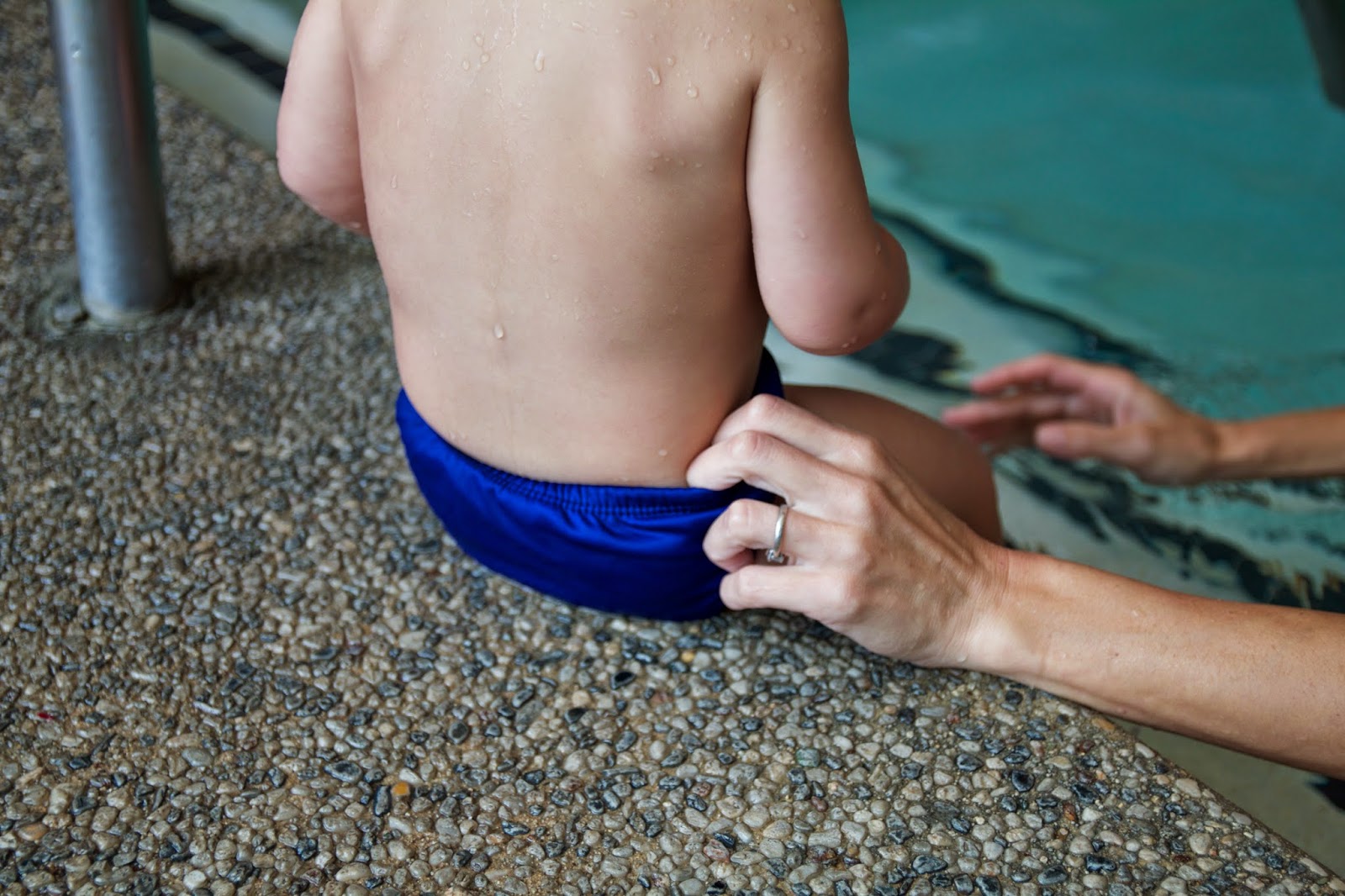
A word on swim diapers: LPB's policy is that all students under the age of 3 (or over 3 and not fully potty trained) must wear a snug-fitting, non-disposable (REUSABLE) swim diaper. We realize that your 2 year old might already be fully potty trained and that you're very proud of her (we are too!). But our warm water can make students relax, and with that comes unexpected surprises in the pool.
![]() |
| Double check for snug fitting at waist/thighs... |
"If all the pools in the County were as clean as La Petite Baleen's, I'd be out of a job!"--San Mateo County Health Inspector
In order to keep our pools the cleanest and safest in the Bay Area, we ask that you cooperate with our policy. If you would like to "double diaper", you may wear a disposable "swim" diaper underneath the reusable swim diaper, but be sure the disposable is tucked inside the reusable. No regular diapers please!
You can purchase appropriate "swim lesson" swimwear at our Swimformation desk, including girls cross-back suits, reusable swim diapers and boys jammers (coming soon!). We also like buying suits from www.swimoutlet.com.
Happy Splashing!
Saturday, April 4, 2015
Balloon Face vs. Blowing Bubbles
If you haven't noticed by now, we do things a little differently here at LPB. We're known throughout the learn to swim industry for our unique child development based curriculum. One of the most obvious differences is that we do not teach blowing bubbles....at least not right away.
The foundation of learning to swim includes:
At LPB, we teach this foundation much differently than most other learn to swim programs. We teach beginning students "Balloon Face" instead of blowing bubbles. Here's why:
Think of the lungs (the center of buoyancy) as an inflatable inner-tube. When you fill them with air, they float. Now, imagine you blew up the inner-tube and then left the valve open. The air would leak out, (blowing air bubbles) and the tube would deflate, losing it's buoyancy and eventually sinking. The idea here is to hold the air inside the lungs so that the body floats.
Another reason why we do not teach beginners to blow bubbles is so that they have enough power behind their exhale to clear their airway (think of a whale blowing it's spout). If you go underwater and blow all your air out, the reflex is to immediately inhale when you surface to breathe. This can cause students to choke by inhaling or sniffing water. We want a powerful exhale (blow!) out before students get a new breath in and return to swimming.
Lastly, the Balloon Face creates pressure inside the mouth and sinuses, preventing water to go in the nose/sinuses. If you have ever gotten water in your nose you know it is very unpleasant and painful. It is one of the most common cause of crying in swim lessons. Once students learn a proper, full-cheeked/lipped Balloon Face, submersions will soon turn into floats, and before you know it...they're be swimming!
So, do we ever teach students to blow bubbles at LPB? Yes! Once students have mastered breath control completely, we teach them "blended breathing" which is when students start their underwater swim with a Balloon Face and then begin to blow their air out as they come up for air. We teach students to "hmmmmmm, blow, breathe" in Level 4, which makes for a more efficient breath for technical stroke development.
So, while it may be fun and silly to teach your little one to blow bubbles in the bath or pool, try teaching them Balloon Face instead....your child will thank you, and so will your child's swim teacher!
The foundation of learning to swim includes:
- Breath control
- Balance
- Buoyancy
At LPB, we teach this foundation much differently than most other learn to swim programs. We teach beginning students "Balloon Face" instead of blowing bubbles. Here's why:
Think of the lungs (the center of buoyancy) as an inflatable inner-tube. When you fill them with air, they float. Now, imagine you blew up the inner-tube and then left the valve open. The air would leak out, (blowing air bubbles) and the tube would deflate, losing it's buoyancy and eventually sinking. The idea here is to hold the air inside the lungs so that the body floats.
Another reason why we do not teach beginners to blow bubbles is so that they have enough power behind their exhale to clear their airway (think of a whale blowing it's spout). If you go underwater and blow all your air out, the reflex is to immediately inhale when you surface to breathe. This can cause students to choke by inhaling or sniffing water. We want a powerful exhale (blow!) out before students get a new breath in and return to swimming.
Lastly, the Balloon Face creates pressure inside the mouth and sinuses, preventing water to go in the nose/sinuses. If you have ever gotten water in your nose you know it is very unpleasant and painful. It is one of the most common cause of crying in swim lessons. Once students learn a proper, full-cheeked/lipped Balloon Face, submersions will soon turn into floats, and before you know it...they're be swimming!
So, do we ever teach students to blow bubbles at LPB? Yes! Once students have mastered breath control completely, we teach them "blended breathing" which is when students start their underwater swim with a Balloon Face and then begin to blow their air out as they come up for air. We teach students to "hmmmmmm, blow, breathe" in Level 4, which makes for a more efficient breath for technical stroke development.
So, while it may be fun and silly to teach your little one to blow bubbles in the bath or pool, try teaching them Balloon Face instead....your child will thank you, and so will your child's swim teacher!
Thursday, February 26, 2015
Who's Who at LPB
Communication is the key to so many things, and swim lessons are no different. It's important for parents and students to have a good understanding of how much they've accomplished and what elements they need to accomplish. LPB has multiple avenues for parents to get this 'intel' on their child's swimming:
Still not sure who to talk to? Here's a who's-who at LPB:
So.....questions? Just ask! We're always happy to help!
- Deck Support: The Deck Support provides feedback and support for teachers. They oversee general safety, class progress and teacher performance. They serve as the liaison between parents and teachers through both written and verbal communication. Still not sure who this is? Just ask at the Swimformation desk or look for their name which is posted on the deck
- Parent-Teacher Communication Form: Want to send your teacher an email? Fill our the Parent-Teacher Communication Form on our website and your teacher will respond before your next lesson.
- Progress Report: Want a physical report on your student's progress? Request a progress report either online through the Parent-Teacher Communication Form or through your Deck Support.
- Director on Duty: Have a question or concern regarding your experience at LPB? Ask to speak with the Director on Duty, their name is posted by the Swimformation desk.
- Online Feedback: We want to hear from you! Please contact us online through the "Feedback" form so we can address your concern.
- Whale Done! Do you love your teacher? Fill out a "Whale Done" at the Swimformation desk. These cute postcards are shared with the entire staff, including management as well as the teacher earning the praise. We love getting Whale Dones!
Still not sure who to talk to? Here's a who's-who at LPB:
- Site Director: Oversees location, director of management.
- Director on Duty: Manager of any given shift, handles questions or concerns about policies, procedures or staff.
- Deck Support: Maintains curriculum quality, provides feedback and support to teachers. Liaison between teachers and parents and tracks student progress.
- Swim Support: Jumps in to substitute and when a student needs a little extra help.
- Swimformation: Customer service representatives who handle scheduling and booking as well as general questions.
So.....questions? Just ask! We're always happy to help!
Subscribe to:
Posts (Atom)